Life does not readily offer many second chances, and surviving a heart attack is one. It is a wake-up call that visually emphasizes what being a go-getter and reforming your day requires to safeguard your health. A question many patients and their families want to know is, What lifestyle changes are needed after a heart attack? And the answer is small and consistent habits that protect the heart against new issues.
A heart attack can be the last heave of ordinary life, but it can be the start of a healthier one. Every move counts, from the food you take, the manner in which you move, how you address stress, and how you take medical recommendations. Recovery is an empowering process that is not only feasible with the right lifestyle adjustments. This is a journey of being resilient, having a healthy heart, and making sure that the second chance is the one.
What Precautions Should Be Taken after a Heart Attack
Healing after a heart attack wouldn’t be simply about medicine, but it would be about good watch over daily habits. These are some of the important precautions for a safer recovery.
Here are some of the precautions:
- Use medicine as instructed to avoid additional complications.
- Do not overwork yourself, afford your heart sufficient rest, and gradually resume vigor.
- Follow up on sugar, cholesterol, and blood pressure regularly.
- Deal with stress by meditating, deep breathing, or seeing a counselor.
- Reduce smoking, alcohol, and cholesterol or blood-pressure-raising foods.
These are little but essential measures that will help to reinforce your recovery and minimize the chance of another heart attack. Heart attacks have become common in young adults and it is imperative to take necessary measures.
Why Are Lifestyle Changes Important After a Heart Attack?
Healing after having a heart attack does not end in the hospital. How you live your day-to-day life has a direct result on your future heart health and life after a heart attack. The likelihood of a second cardiac event happening without meaningful changes is high.
- Prevent relapse: Healthy practices reduce the chances of a heart attack.
- Enhance life quality: Active recovery provides superior vigor and strength, mainly to those who have gotten used to life following a mild heart attack.
- Extend lifespan: Positive practices have been proven to increase life expectancy following a first heart attack by decreasing risk factors.
- Improve mental health: Stress management and self-care minimize anxiety and increase emotional resilience.
- Monitor your health: Consistent check-ups and tests allow you to understand that your heart is in good shape and reveal possible warning signs early on.
lifestyle changes after heart attack is not optional; it is one of the main steps towards living longer, healthier, and more confidently. Choosing a trusted heart care hospital in Chennai ensures timely check-ups and advanced monitoring.
5 Lifestyle Changes Are Needed After a Heart Attack?
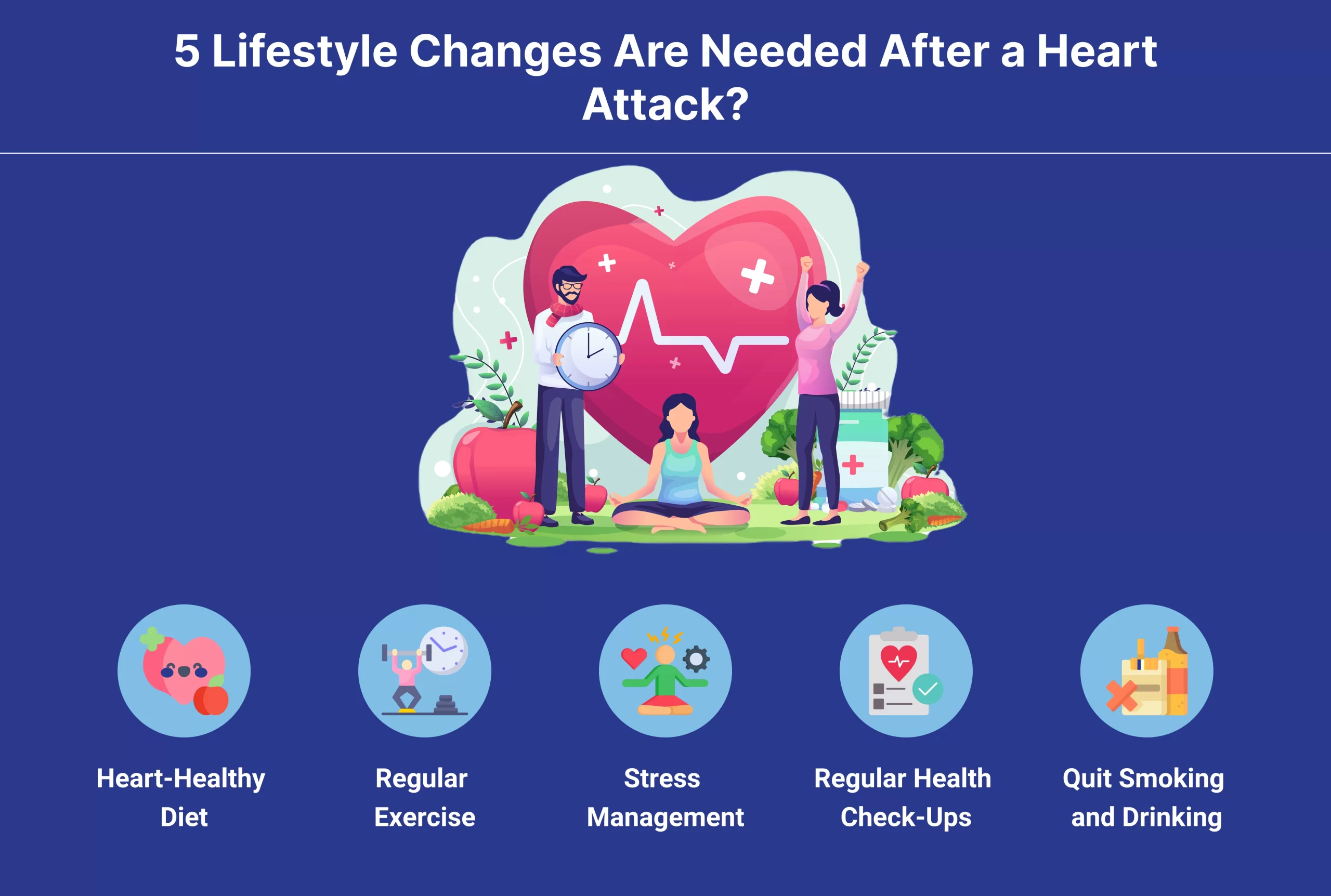
The basis of recovery is healthy practices. Five lifestyle modifications post-heart attack may help mitigate risks, promote health status, and aid in long-term recovery.
Heart-Healthy Diet
Nutrition is a very strong factor in cardiac recovery. After a cardiac event, following a heart attack, a precautionary diet helps reduce cholesterol, control blood pressure, and prevent further blockages. Eat more fruits, vegetables, whole grains, lean proteins, and good fats such as nuts and olive oil. Meanwhile, limit food, which has the potential to trigger heart-related complications, including fried foods, red meat, and processed or salty foods.
Knowing the list of foods to avoid after a heart attack, like sugary drinks, excess caffeine, and packaged junk foods, is just as important as choosing what to eat. Regular changes in diet allow patients to take the load off the heart and promote healing, so that they see gradual improvement on their way to a quality life.
Regular Exercise
One of the best solutions for strengthening the heart after recovery is safe physical activity. Light, physician-recommended exercises increase blood flow, reduce blood pressure, and increase energy. Light exercises like walking, stretching, and yoga can help make a difference in healing. Multiple forms of exercise, including brisk walking, cycling on a stationary bike, or cardiac rehab programs overseen by trained personnel, are advised as low-impact exercises for heart blockage.
20-30 minutes of moderate exertion, 5 days per week, is usually adequate to enhance recuperation and not work the heart too hard. Sharp efforts, particularly when exercising in cold weather, should be avoided, and a cardiologist should always consult you before initiating or switching workouts. Frequent movement is one of the aspects of the recovery process that not only improves physical health but also builds confidence and emotional well-being. The benefits of physical activity for heart health are innumerable.
Stress Management
Psychological recovery as much as physical recovery should follow a heart attack. Another event can be enhanced by the undue strain, stress, and anxiety and depression imposed on the cardiovascular system. With stress management, it is possible to maintain levels in the blood pressure and in the heart rate. Such basic techniques as meditation, careful breathing, or mindfulness exercises are very effective. It is also through counseling and support groups that there is reassurance and elimination of the feelings of isolation.
To adapt to everyday activities, things like pursuit of hobbies, time with family members, and having a positive mindset could be huge factors in recovery. Stress management is a routine that protects both your mind and your heart, and it results in a more balanced, healthier life once you have a heart attack.
Regular Health Check-Ups
A routine check-up should make you track your progress and avoid complications later. Once you have a heart attack, a routine appointment with your cardiologist will keep your levels of blood pressure, cholesterol, and sugar under control. To track heart functioning, physicians can refer to heart attack risk testing (ECGs, echocardiogram, stress tests). These assessments help you understand how to know your heart is healthy and whether adjustments in medication or lifestyle are needed.
The check-ups will also help to discuss any new symptoms before heart attack, including the feeling of unusual tiredness or chest pain. Remaining proactive in monitoring your health means a decrease in the likelihood of a second heart attack and the comfort of understanding that your recovery is progressing in the correct direction.
Quit Smoking and Drinking
Two significant conditions that precipitate heart issues are smoking and high intake of alcohol, particularly in the post-cardiac event period. Smoking constricts blood vessels, Oxygen Insufficiency, and increases clotting, which aggravates the threat of a second attack. One of the most effective lifelong lifestyle coping changes for a heart attack is smoking cessation. Excess alcohol may increase blood pressure and damage the heart muscle.
Although small amounts that doctors recommend could be safe in patients, moderation is mandatory. Long-term recovery involves avoiding binge drinking and concentrating on the healthier options. To get rid of tobacco as well as decrease alcohol consumption, the heart of the patient gets stronger, thus improving the general health of the patient by a great margin, which leads to a significant increase in life expectancy after having a heart attack.
Final Word
Healing after a heart attack involves not only the healing process but the acceptance of a new lifestyle, which includes the proper precautions and lifestyle modifications. At Meridian Hospitals, we are aware of how difficult the journey can be, and we aim to offer our patients full support with the help of our team of highly skilled cardiologists, critical care experts, nutritionists, and rehabilitation personnel. Our troop is focused on helping every patient achieve a healthier and stronger future with the most developed diagnostic tools and personalized care plans. Dietary tips, exercise programmes, or continuous check-ups on the heart, we are with you throughout the process. To be provided with decent heart care and a stable recovery, call us today and leave your second chance at life in the care of Meridian Hospitals.
Frequently Asked Questions
1) How can I make my heart stronger after a heart attack?
A healthy diet, unstrenuous doctor-recommended activities, stress reduction, and smoking and alcohol cessation can all help to strengthen your heart. Frequent check-ups assist with the progress, as well.
2) What is healthy after a heart attack?
A healthy lifestyle approach to a heart-friendly routine includes healthy food, moderate physical activity, rest, stress management, and taking prescribed medicines. The habits encourage recovery in the long term.
3) What is the average life expectancy after a heart attack?
The life expectancy after the initial heart attack varies with age, severity, and change of lifestyle. Many patients spend many decades in good quality of life with proper care and precautions.