
The treatment of cancer is a process that influences the body in numerous aspects. At this stage, food is a strong force that helps you remain strong and energetic and supports recovery. The concept of foods that fight cancer might seem complicated, but it simply means having the right to choose what to eat to gently nourish the body and provide it with the energy it needs.
In India, there is a tendency to blend traditional home-cooked food with medical advice, and this intervention contributes to making nutrition more comforting and familiar. This blog describes what are the best cancer-fighting foods, what to avoid, and the role nutrition plays in your treatment in an easy, friendly, and comforting manner. To get more services and medical help, you may also have a look at the 24/7 Services of Meridian Hospitals.
Why Does Nutrition Matter During Cancer Treatment?
Proper nutrition assists your body in managing treatment, maintaining weight, and healing more easily. Some cancer treatments can sometimes impact the appetite, taste, or even the digestive system; therefore, the appropriate choice of food can make you feel livelier and more balanced.
Around 9 out of 10 cancer cases happen because of lifestyle habits and environmental factors. Only a small number are due to inherited genes. Therefore, it becomes important to consume good food and lead a perfect lifestyle. Among the advantages of a balanced diet in the course of treatment, there are:
Supporting immunity
- Improving energy levels
- Strengthening of muscles.
- Fostering digestive comfort.
- Assisting the body to recover.
Keeping you in motion and ensuring you are fine in your care.
Eating well does not imply eating more; eating well implies taking the foods that are gentle and easy to digest and nourishing.
In case you wish to read general health-related information, you may read health articles of Meridian Hospitals.
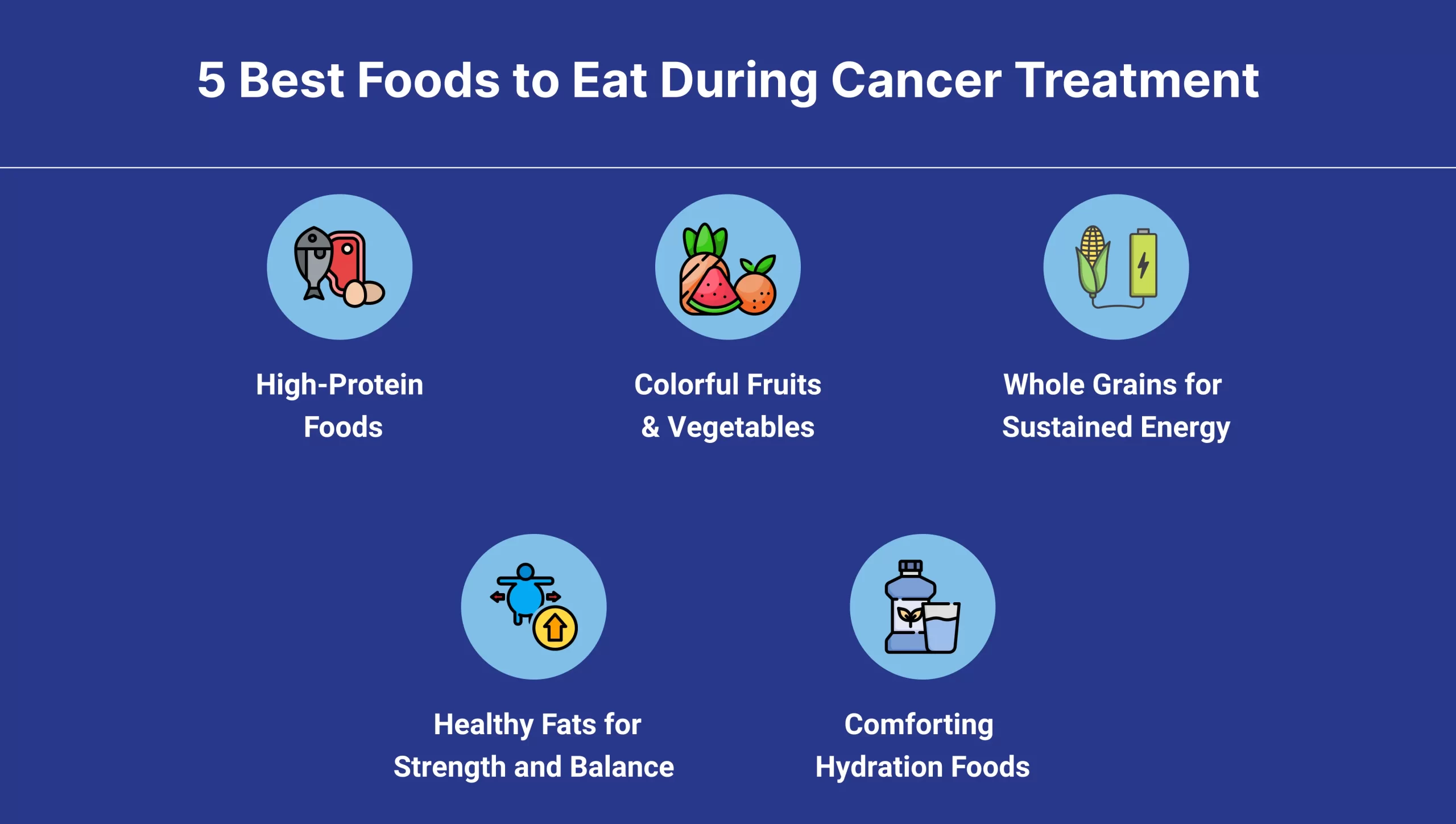
5 Best Foods to Eat During Cancer Treatment
In India, around 1.56 million people are expected to be diagnosed with cancer in 2024, and sadly, nearly 874,000 may lose their lives to it.
All bodies react differently, so your doctor or dietician can recommend some of the foods depending on your medication. The following are some of the most useful cancer-fighting foods that promote overall strength and wellness.
1. High-Protein Foods
Protein aids in repairing tissues, developing immunity, and keeping muscles strong. It is particularly relevant in cases of treatment when the body consumes a greater amount of energy and nutrients.
Great Protein Sources:
- Lentils such as moong dal, masoor dal, and so on.
- Paneer, curd, buttermilk
- Soya chunks or tofu (provided that it fits you)
- Eggs (if you consume them)
- Peanut chikki, or roasted chana (in moderation, assuming one can digest it)
- Khichdi and dal, and ghee to get warm and feed.
Why It Helps:
Protein aids the natural healing of the body and makes you feel energized all day. When you have a small appetite, go with soft, easy meals such as dal rice, vegetable daliya, or curd rice.
2. Colorful Fruits & Vegetables
Vitamins, minerals, fibre, and natural antioxidants present in fruits and vegetables contribute to strengthening the immune system and wellness.
Best Options:
- Carrots, beetroot, and sweet potatoes.
- Spinach, broccoli, and lauki (bottle gourd).
- Papaya, banana, apples, and pomegranates.
- Berries (when available)
- Oranges, lemon water, and citrus fruits such as mosambi.
Why They Help:
The vivid colouration of fruits and vegetables reflects various groups of nutrients. These foods are useful in promoting digestion, hydration, and providing natural energy. Most importantly, they do not harm the stomach, and they come in handy during treatment.
When the digestion is delicate, you can take well-cooked vegetables or fruit stew, which is less likely.
Other Helpful Cancer-Fighting Foods
Below are additional foods that can support comfort and nutrition during treatment:
3. Whole Grains for Sustained Energy
Whole grains are good sources of fibre and essential nutrients that make them provide a steady amount of energy throughout the day.
Examples:
- Oats
- Daliya (broken wheat)
- Brown rice
- Whole wheat chapati
- Whole grains such as ragi or jowar (where appropriate)
Why They Help:
These foods provide sustained energy, and this is significant since sometimes treatment may lead to sleepiness. They are also beneficial in ensuring a healthy digestive rhythm.
4. Healthy Fats for Strength and Balance
Healthy fats make you full, aid immunity, and assist in vitamin absorption.
Examples:
- Homemade ghee
- Olive oil or mustard oil
- Flax seeds (finely powdered)
- A few seeds, such as sunflower or pumpkin seeds.
Why They Help:
Healthy fats are particularly soothing in case you have a meager appetite. A small amount of ghee on dal or chapati can give meals nourishment, or they do not burden.
5. Comforting Hydration Foods
It is important to keep hydrated, particularly in case the digestion is affected by treatment.
Good Hydration Choices:
- Coconut water
- Lemon water
- Clear vegetable soups
- Curd or buttermilk
- Light herbal teas (only when approved by the doctor)
Why They Help:
Hydration foods ensure fatigue is avoided, aids in digestion, and makes you feel refreshed. Coconut water, especially, is quite relaxing and contains electrolytes. If you’re undergoing treatment, our specialised day-care chemotherapy services at Meridian Hospitals complement nutritional support for the best possible comfort and care.
Foods to Limit During Cancer Treatment
Depending on your course of treatment, your doctor may provide certain advice. Overall, the following foods are minimal to store:
- Deep-fried or oily foods
- Very spicy dishes
- Snack food or processed snacks.
- Sugary desserts
- Very strong teas or coffees
- Raw or uncooked vegetables and fruits.
- Alcohol (do not take at all unless ordered by your doctor)
These foods can slow down digestion or decrease your appetite, making it more difficult to obtain the nutrition that your body requires. That’s why at our best hospital in Chennai, we also emphasise timely diagnostic check-ups and advanced radiology services to support overall care during treatment.
Conclusion
Eating cancer-fighting foods is an effective and non-aggressive method of taking care of your body throughout the treatment. Little, frequent meals, being hydrated, and eating basic foods prepared at home can go a long way to how you feel. It is important to remember that, as an individual, your nutritional requirements are unique and, hence, it is worth listening to your doctor or dietician.
At Meridian Hospitals, we are going to ensure that every patient feels supported, informed, and cared about. In case you or someone close to you requires assistance in facilitating nutrition during therapy, our team will be there to assist you with individualised attention. Contact us right now to get 24/7 support.
FAQ’s
- Can food really help during cancer treatment?
Yes. While food does not replace treatment, good nutrition supports strength, immunity, comfort, and overall wellness.
- What if I don’t feel hungry during treatment?
Try small, frequent meals. Choose soft, easy foods like soups, khichdi, curd rice, or mashed vegetables.
- Are there specific Indian foods that help during treatment?
Yes. Foods like dal, curd, banana, papaya, coconut water, oats, and daliya are gentle, nutritious, and easy to digest.
- Should I take supplements?
Only if your doctor recommends them. The body’s needs are unique during treatment, and supplements should be taken with medical guidance.
- Can I eat outside food?
It is best to avoid outside or packaged food, as it may be harder to digest. Fresh, home-cooked meals are ideal for comfort and safety.