Heart disease develops silently and becomes serious when the arteries supplying the heart with blood become blocked. This disease, called coronary artery disease, can cause chest pain, breathing difficulty, and heart attacks if left untreated. Doctors typically suggest two tried and true procedures to unblock the blood flow: Angioplasty vs Bypass surgery.
2. What Is Angioplasty?
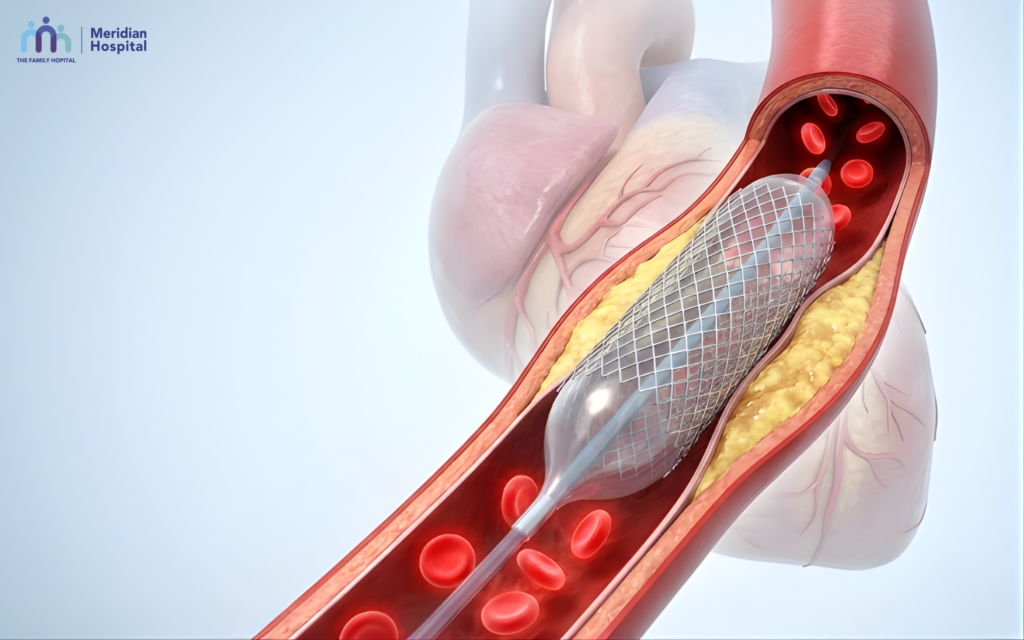
Angioplasty for heart blockages is a minimally invasive cardiac procedure used to open clogged arteries that employs a balloon and a stent, without the need for open heart surgery.
2.2 How Angioplasty Works
Angioplasty is done in a special cardiovascular laboratory and generally lasts about one to two hours.
- A catheter – a thin tube – is passed through the wrist or groin
- The catheter is then routed to the blocked artery.
- A small balloon is inflated in the constricted part to open it out.
- A stent is inserted to keep the artery open permanently.
It allows rapid restoration of blood flow and is the most widely applied therapy in contemporary cardiac care for patients with coronary artery disease.
2.3 Who Is Angioplasty Best For?
In Angioplasty vs Bypass Surgery, Angioplasty is recommended for:
- Single or mild blockages
- Patients diagnosed early
- Younger patients with good heart function
- Elderly patients who cannot undergo major open-heart surgery
Because recovery is fast, angioplasty is often preferred for heart treatment for elderly patients.
3. What Is Bypass Surgery?
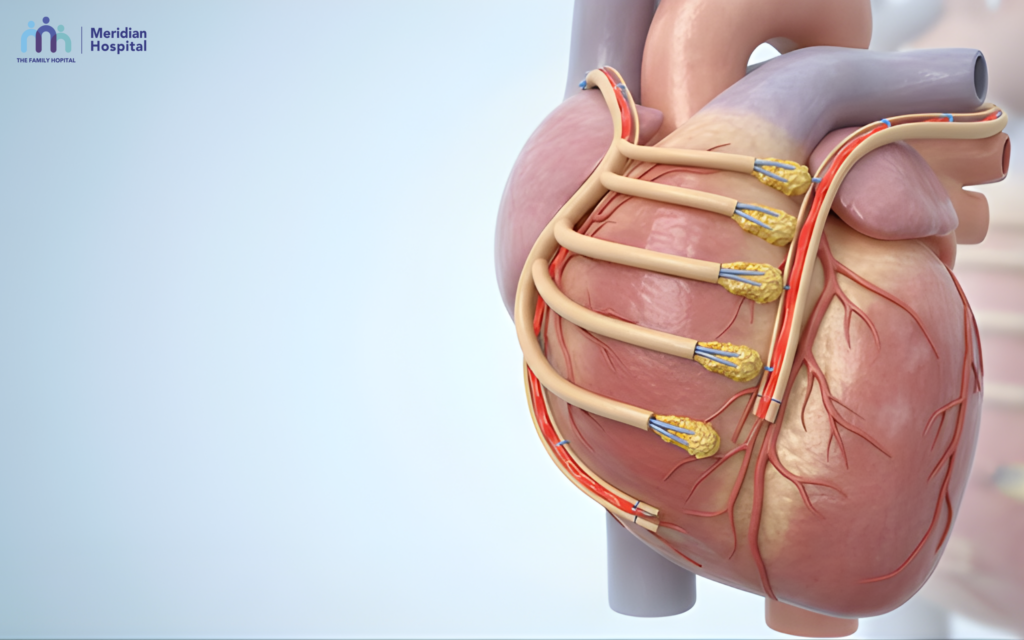
An open-heart procedure in which a new passageway is created for the blood to bypass the blocked heart arteries.
3.2 How Bypass Surgery Works
Bypass surgery is performed under a general anesthetic and involves:
- Opening the chest to get to the heart
- Taking normal blood vessels from the leg, arm or chest
- Attaching these vessels to bypass the blocked coronary arteries
- Ensuring that whole blood flows smoothly to the heart muscle
It is considered to be the most durable treatment for coronary artery disease in advanced heart disease.
3.3 Who Needs Bypass Surgery?
Doctors usually recommend bypass surgery for:
- Multiple artery blockages
- Severe or complex blockages
- Diabetic patients
- Patients with weak heart-pumping capacity
In Angioplasty vs Bypass Surgery, bypass is chosen when long-term results are more important than quick recovery.
4. Angioplasty vs Bypass Surgery
| Feature | Angioplasty | Bypass Surgery |
| Type of Procedure | Minimally invasive, catheter-based | Open-heart surgery |
| Recovery Time | Days to 1 week | Weeks to months, rehab needed |
| Pain Level | Mild, managed outpatient | Higher initially, incision-related |
| Hospital Stay | 1-2 days | 5-7 days |
| Suitable for Elderly | Often preferred, lower risk | Possible if fit, higher risk |
| Risk Level | Re-stenosis, clots (lower procedural) | Infection, stroke (higher procedural) |
| Long-Term Results | Good for simple cases, may repeat | More durable multivessel/diabetes |
This comparison clearly highlights the practical differences between Angioplasty vs Bypass Surgery.
5. Which Is Better for Different Age Groups?
5.1 For Children
Heart problems in children are usually congenital. These cases are treated with specialised procedures rather than standard Angioplasty vs Bypass Surgery.
5.2 For Adults
- Angioplasty is effective when blockages are detected early
- Bypass surgery is recommended for multiple or recurring blockages
Lifestyle modification and early screening play a key role in this age group.
5.3 For Senior Citizens
- Angioplasty is favored because it involves a faster recovery and carries less risk.
- Bypass surgery is never done routinely or as a convenience.
The best heart treatment for elderly patients’ safety and quality of life.
6. Cost Difference: Angioplasty vs Bypass Surgery
| Treatment | Approximate Cost |
| Angioplasty | Lower |
| Bypass Surgery | Higher |
The cost depends on:
- Number of stents or grafts
- Hospital infrastructure
- Patient’s condition
Well-equipped centres like the Best cardiology hospital in Chennai provide advanced treatment with transparent pricing.
7. Recovery & Lifestyle After Treatment
7.1 Life After Angioplasty
Recovery after angioplasty is usually quick:
- Discharge within days
- Return to daily activities within a week
- Regular medications and follow-ups
Patients are advised routine check-ups with the best cardiologist in Chennai.
7.2 Life After Bypass Surgery
Recovery is gradual:
- Extended rest period
- Cardiac rehabilitation
- Strict diet, exercise, and lifestyle changes
Both treatments require long-term care to prevent future heart blockage causes.
8. Risks & Safety: What You Should Know
8.1 Angioplasty Risks
- Re-blockage of arteries
- Rare blood clot formation
- Possibility of repeat procedure
8.2 Bypass Surgery Risks
- Infection
- Longer healing time
- Higher risk in elderly or diabetic patients
Understanding risks is important when comparing Angioplasty vs Bypass Surgery.
9. Doctor’s Decision: How Treatment Is Chosen
The Best Cardiology Specialist decides between Angioplasty vs Bypass Surgery based on:
- Number and severity of blockages
- Age and overall health
- Diabetes and blood pressure levels
- Heart strength
- Results of a coronary angiogram in Chennai
Advanced centers such as Heart Hospital in Kolathur, like Meridian Hospital, follow guidelines for accurate diagnosis and treatment planning.
Angioplasty and bypass surgery are both life-saving procedures. Angioplasty vs Bypass Surgery – which is the better option – is totally dependent on the patient. Early identification of your condition, getting expert opinion and the best heart specialist hospital in Chennai provides for better results. If you have any signs of these, see a cardiologist right away — treatment in time can save your life.
FAQ
Is angioplasty safer than a bypass?
Angioplasty is safer for minor blockages and for people considered high risk for surgery.
Can I avoid bypass surgery?
Early diagnosis and angioplasty can prevent bypass surgery.
Which treatment has longer durability?
Bypass surgery tends to be more long lived.
Is angioplasty painful?
Angioplasty is not very painful.
Is it possible to do bypass surgery for a senior citizen?
Yes, but you would have to be medically evaluated very thoroughly first.