Exercise may leave you perspiring, gasping, and even sore now and then, but the fact really is that these efforts pay off much more than flab-free limbs or exhaustion. The protection and strength of your heart is one of the greatest advantages of regular physical activity. Not only can movement enhance circulation, it can also help to lower blood pressure and even reduce stress, all of which act as natural defenses against cardiovascular issues.
Actually, an active lifestyle is by far one of the safest methods of reducing the risk of heart disease and improving the quality of life. The best exercises for heart health aren’t about intensity alone; they focus on consistency, balance, and safety. A brisk walk, a round of resistance training, or even some mindful stretching is the correct routine that will ensure your heart continues operating at the top level while providing you with greater energy and resilience in other aspects of life.
How Exercise Helps Your Heart
Your heart is a muscle, and just like any muscle, it becomes stronger by exercising. Workout enhances blood flow, keeps arteries flexible, and promotes improved oxygen transportation in the body. It reduces bad cholesterol, normalizes blood pressure, and burns excess body fat, all of which are significant risk predictors of heart disease. Regular physical activity not only reduces harmful fat but also helps in balancing cholesterol and supporting heart function.
Exercise also reduces stress hormones to reduce the burden on the heart. All together, these improvements increase endurance and efficiency; over time, the heart can pump harder with less effort. In brief, regular exercise is one of the most effective and yet least complicated methods of ensuring sustainability in cardiovascular health.
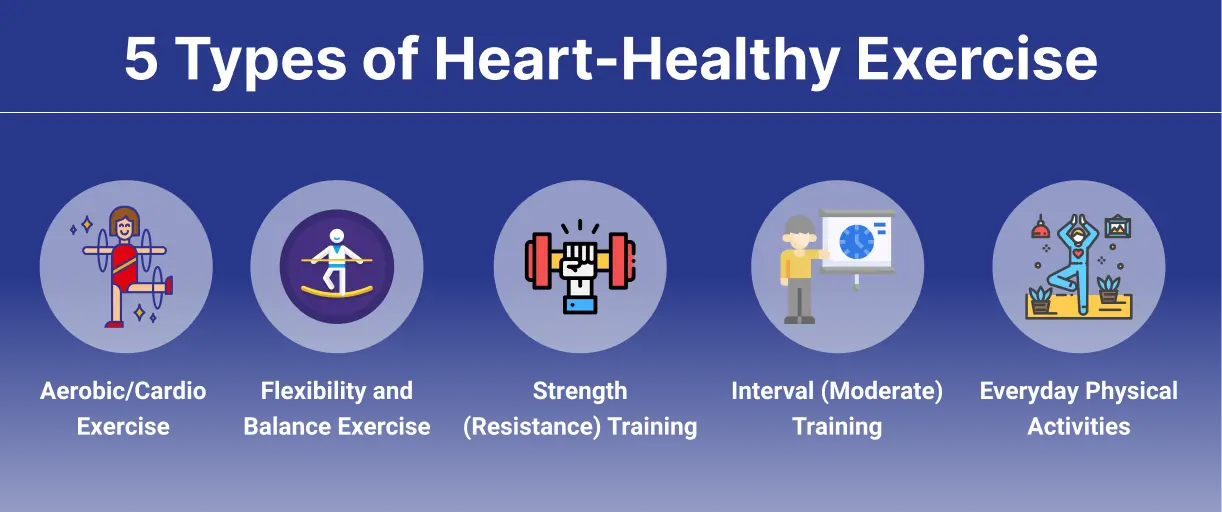
5 Types of Heart-Healthy Exercise (with Cautions and Considerations)
Each exercise will not affect your heart the same way. Some are concentrated on endurance, and some on strength or balancing; however, combined, they make a well-rounded solution and keep the cardiovascular system healthy. Below are five types of heart-healthy exercises, each with its own benefits and important cautions to keep in mind.
Aerobic/Cardio Exercise
Aerobic exercises, also known as cardio, are the cornerstone of heart health. Activities that include brisk walking, cycling, swimming, or dancing enhance circulation, enhance the intake of oxygen, and help build the heart muscle. Moderate cardio with a duration of 30 minutes a day will help in reducing cholesterol levels, managing blood pressure, and increasing overall stamina.
Caution: Start slow if you are new to cardio, and avoid sudden bursts of high intensity. Develop stamina slowly so as not to overwork the heart.
Flexibility and Balance Exercise
Strength training rounds out the cardio with weight loss, fat reduction, and a boost in metabolism. Push-ups, squats, resistance band training, or light weight lifting let you have a healthier body composition, and this means less stress to your heart.
Caution: Use controlled movements and moderate weights. Do not hold your breath while lifting, since high blood pressure can occur.
Strength (Resistance) Training
Strength training would complement aerobic exercises to gain lean muscle, enhance metabolism, and aid in achieving good body composition. The resulting stronger body helps trim unnecessary fat and relieves the heart of its extra burden to perform in a more efficient manner. Examples here are push-ups, squats, resistance band work, and lifting lighter to moderate weights. Just two to three sessions weekly may strengthen the cardiovascular system and add endurance and balance.
Caution: Apply controlled, steady motion. Use moderate weights and do not hold your breath because the blood pressure may increase abruptly.
Interval (Moderate) Training
Interval training is composed of alternating moderate follow-up efforts and rest or lighter work. As an example, switching between jogging and walking elevates cardiovascular capacity and maintains fitness activities. It is effective in enhancing heart efficiency without necessarily having to spend a lot of time working out.
Caution: Stay within your target heart rate zone. Irregular heartbeat or fatigue also may be the result of overexertion, particularly in beginners
Everyday Physical Activities
Heart-healthy exercise is not always about going to the gym. Even normal daily activities such as climbing the stairs, doing gardening, brisk walking at work, or household chores can count towards daily movement goals. These things accumulate; they keep your heart active all day long.
Caution: Don’t push your body suddenly; gradual, consistent effort is safer than overdoing tasks in one go.
Exercise Tips
- Warm up & cool down – get your muscles and slow down your heart.
- Be regular– reach 150 minutes of moderate activity per week.
- Stay hydrated – have drinking water at hand during workouts.
- Choose fun things to do– you will be more likely to pull through.
- Listen to your body – stop if you feel chest pain, dizziness, or unusual shortness of breath.
- Check with a doctor- particularly if you have heart conditions or other health issues.
What is a Normal Heart Rate When Working Out?
It is also necessary to maintain your target heart rate zone when performing the best exercises for heart health. This helps you reap the benefits of aerobic exercise and resistance training but does not overwork you.
| Age | Target Heart Rate Zone (50–85% of Max HR) | Maximum Heart Rate (Approx.) |
| 20–29 | 100 – 170 bpm | 200 bpm |
| 30–39 | 95 – 162 bpm | 190 bpm |
| 40–49 | 90 – 153 bpm | 180 bpm |
| 50–59 | 85 – 145 bpm | 170 bpm |
| 60–69 | 80 – 136 bpm | 160 bpm |
| 70+ | 75 – 128 bpm | 150 bpm |
How Do You Know Your Heart is Healthy During Exercise?
Doing the best exercises for heart health is only effective if your body responds well. This is how it can be checked:
- Steady Heart Rate – During aerobic exercises, your heart rate should rise gradually, not suddenly.
- Target Zones – Stay within your recommended heart rate range; this ensures you get the benefits of aerobic exercise without overexertion.
- Breathing Test: – You ought to be capable of talking during a workout; catching your breath indicates you are overdoing it.
- Quick Recovery – After resistance training or interval workouts, your heart rate should return to normal within minutes.
- No Warning Signs– No chest pain, dizziness, or hopeless tiredness means you are to stop.
Tip: Always check heart rate when exercising to ensure safe intensity and long-term cardiovascular health.
Exercises to Avoid/Modify with Heart Problems
Workouts do not fit everybody, and when you have existing heart conditions, some workouts are not conducive to say the least. While the best exercises for heart health focus on balance and safety, certain activities may strain the cardiovascular system. This is especially true for people already at risk of early warning signs of a heart attack or cardiac arrest, where high-intensity workouts may increase strain. High-intensity aerobic exercises like sprinting, extreme cycling, or long-distance running can push the heart beyond safe limits. Ignoring such warning signs could even lead to heart stroke symptoms.
Heavy resistance training with excessive weights may also spike blood pressure and increase risk. Rather, resort to more lightweight varieties of strength training and develop endurance over time.This yoga is not recommended as it can lead to dehydration and heart strain due to hot yoga or intense stretching.
High-intensity ones are dangerous to a beginner: you should start with moderate versions. Always check your heart rate when exercising and stay within your target zone. With proper guidance, modified types of exercise like walking, light yoga, or swimming can still deliver the key benefits of aerobic exercise without unnecessary strain. For individuals with a medical history, it’s also crucial to understand the differences between a heart attack and cardiac arrest to recognize risks early
Final Word
Not every intervention to take care of your heart must be drastic, and small but regular movement can be a game-changer. From aerobic exercises that boost circulation to resistance training that builds strength, each activity plays a role in keeping your heart healthy. The key is choosing the best exercises for heart health, listening to your body, and exercising within safe limits.
Instead, remember to be regular and moderate, rather than intense. In the case of other conditions, professional instructions are necessary before initiating or changing a regimen. If you want to understand more about types of heart diseases, our experts can guide you on the right preventive approach. Our cardiac care hospital in Chennai has expert doctors who can guide you with the right preventive approach. Meridian Hospitals has highly qualified cardiologists, along with superior infrastructure dedicated to the preventive heart care focus and your individual needs to ensure you receive the best, correct advice and checks.
Starting out in your health and fitness or adapting to a heart condition, Meridian Hospitals can be the support you need with the expertise to make your heart strong, safe, and healthy for many years to come. For appointments, consultations, or second opinions, feel free to contact us and take the first step toward a healthier heart.
Frequently Asked Questions (FAQs)
1) What is the best exercise to improve heart strength?
Some of the most effective exercises for the heart include brisk walking, cycling, and swimming because they improve blood flow and stamina.
2) Can a weak heart become strong again?
Heart functioning may well improve with positive lifestyle modifications, safe aerobic activities, and medical advice.
3) Can exercise repair heart damage?
Working out will not fix permanent heart damage; however, it will aid in slowing the disease, as well as enhancing circulation and overall strength.
4) What are 5 exercises that are good for the heart?
Walking, jogging, cycling, swimming, and resistance exercise are some of the best methods of strengthening the cardiovascular system.
5) Is coffee good for your heart?
Moderate intake of coffee contains benefits such as promoting heart health, and caffeine can increase the heartbeat and blood pressure.