
Breast cancer awareness is more than just a campaign; it is a life-saving one, emphasizing the importance of early detection and treatment of breast cancer. Breast cancer is the most common form of cancer among women, and although this disease can also affect men, its effects are far more significant in females. The early signs of breast cancer in young females, such as unusual lumps, constant pain, or discharge from the nipples, can make all the difference in recovery. A simple self-exam for breast cancer, if performed on a regular basis, allows people to identify the changes before they become severe.
In the current world of ours, knowledge regarding cancer awareness, whether it is spotting the early signs of breast cancer in women or the treatment for breast cancer, is critical. With advancements in care, patients have access to multiple treatment options, including surgery, radiation, and chemotherapy for breast cancer. Being knowledgeable, proactive, and consistent with self-examination can give people the power to ensure they can safeguard their health and take action before it is too late.
What Is Breast Cancer?
Breast cancer is a disease that occurs when cells of the breast start to grow uncontrollably and form a tumor, which may spread to surrounding tissues or other parts of the body. It is the most common cancer found in women, although men can also be diagnosed with it.
Detecting the condition early is important because breast cancer treatment in India is most effective during the earlier stages of the disease. The initial symptoms of breast cancer in women can be lumps, skin changes, or nipple discharge. In some cases, women may experience the early signs of breast cancer, such as rash or strange swelling.
What is a Breast Self-Exam?
A breast self-exam is a simple, at-home method of checking your breasts for any changes, skin irregularities, or other common symptoms. While it does not take the place of medical screenings, performing a self-exam for breast cancer each month helps women become familiar with their breast tissue and quickly recognize unusual signs of breast cancer. This preventive step is in support of cancer awareness and promoting early medical consultation in case of any abnormality detected.
Why Are Self-Exams Important?
Women who make it a habit to examine their own breasts every month are taking a very easy but effective step toward knowing how their bodies are. They can maximize the likelihood that problems will be caught early in order for breast cancer treatment to be most effective.
- Identify breast cancer at an early stage before it worsens
- Easy to use, fast, and completely free of charge.
- Helps to teach you what normal feels like in your breasts
- Facilitates breast cancer awareness and proactive health care
- Supplement mammograms for better protection
A few minutes here and there will make a lifesaving impact.
5 Early Warning Signs of Breast Cancer
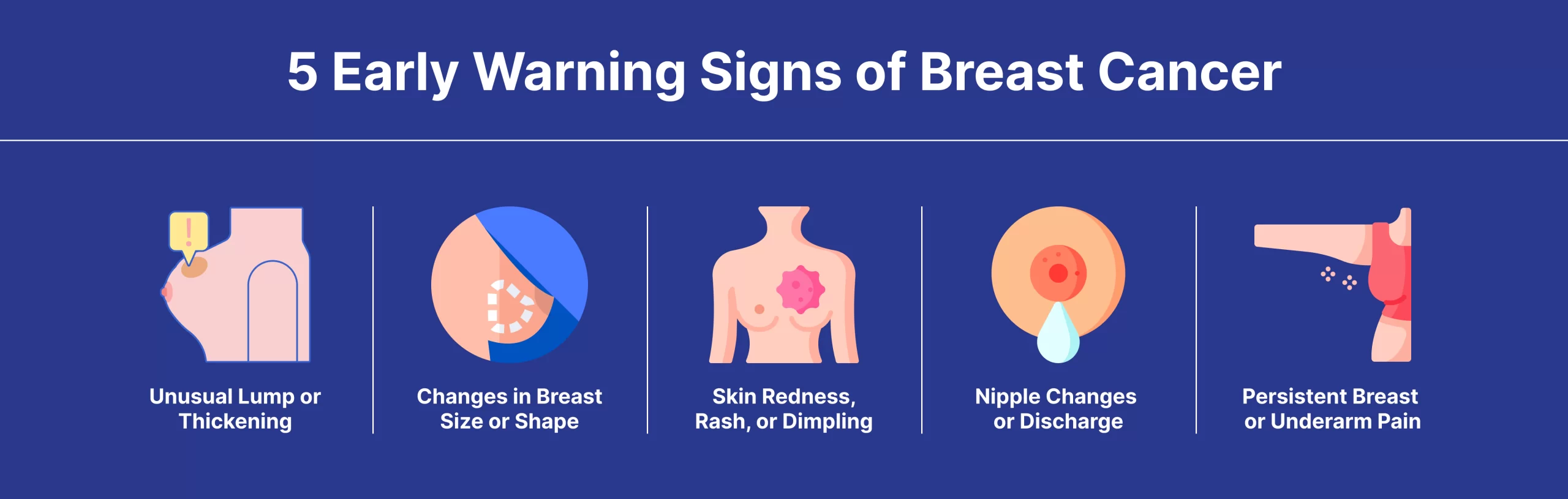
It is important to know the warning signs of breast cancer so that you can get treated early enough when it can be treated. While not all changes are indicative of cancer, there is no harm in being aware. Below are the most common warning signs:
1. Unusual Lump or Thickening
One of the first early signs of breast cancer in women is a hard lump or thickened area in the breast or underarm. Unlike soft and movable lumps that result from benign lesions, cancerous lumps are usually firm and immovable. Early detection of such changes while performing a self-exam for breast cancer can result in faster treatment for breast cancer, which plays a significant role in the chances of recovery.
2. Changes in Breast Size or Shape
Significant changes such as swelling in one breast, shrinking, or uneven contours could be indicative of signs of breast cancer. Some of these changes are subtle and easy to overlook if you do not make a self-examination. For young females or women during breastfeeding, these types of symptoms may be wrongly attributed to hormonal or lactation changes, but it is always best to have them checked by a doctor.
3. Skin Redness, Rash, or Dimpling
Redness, thickening, and a rash that doesn’t heal are all common examples of breast cancer rash. Dimpling of the skin that can have a texture similar to an orange peel is another warning sign of breast cancer. These changes may be a sign of underlying damage to your tissues or the growth of a tumor, so getting checked out by the medical team is important.
4. Nipple Changes or Discharge
Inversion of the nipple, sudden change in the shape of the nipple, or unusual discharge (especially bloody or clear fluid) are strong indicators of breast cancer. While some discharges can be caused by infections or changes in hormone levels, if the problem is ongoing or there is no clear reason, then it cannot be overlooked. Early identification of symptoms in the nipple and its associated areas will give more chances for successful treatment options for breast cancer.
5. Persistent Breast or Underarm Pain
While breast cancer is not always painful, ongoing discomfort in the breast or armpit area can be one of the early signs of breast cancer in females. Pain that does not go away with time and medicines should never be ignored. It might be an indication of deeper tissue changes, and it is best to consult a doctor to get the proper diagnosis and treatment promptly.
5 Mistakes to Avoid While Doing Self-Exams
And while a breast self-exam is very simple and effective, many women make unknowing errors that can negate its effectiveness. Knowing the right way to conduct the exam is important, but knowing what not to do is equally important.
-
Skipping Regular Checks
Many women only perform a self-exam for breast cancer once in a while, but consistency is key. Breast lump detection is easier when performed every month. Detecting the early signs of breast cancer in women requires regular checks, preferably once every month. Regular exams not only help to strengthen breast cancer awareness but also give you the confidence to know what is normal and what is something to look out for in your health.
-
Using Fingertips instead of Flat Fingers
One of the most frequent mistakes is that only the fingertips are used to feel for lumps. Fingertip covers less area and may not pick up deeper irregularities. Circular friction is used to identify the hard lumps or thickening with the flat part of your fingers. Missing such changes may delay treatment for breast cancer, which is why it is important to do the technique correctly in every exam.
-
Neglecting Symptoms Due to Their Insignificance
Small changes, such as mild nipple discharge or mild skin irritation, can be easily ignored. However, even subtle signs of breast cancer in females should be taken seriously. If lumps are present or if the skin is always red, then this may be a sign of something going wrong. If they are ignored and allowed to get worse, life-saving treatment options for breast cancer can be delayed. Prompt medical consultation is always a safer option.
-
Rushing Through the Process
A rushed and haphazard self-examination is not as good. Some women complete the check in less than a minute, which makes it more likely to miss early symptoms of breast cancer, such as rash, pain, or lumps.
A complete exam should take several minutes and include the entire area of the breast, underarm, and collarbone. Remember, the process is time-consuming; being patient will help to get more accurate results and more confidence in the results.
-
Thinking Self-Exams as Substitutes for Mammograms
Another mistake is that people believe self-exams are sufficient to keep them safe. While they are important to raise awareness of breast cancer, they cannot identify all problems. Medical screenings like mammograms, ultrasounds, or MRIs are extremely important, especially for women over 40 or those with a family history. Self-exams are a good complement to professional follow-ups and advanced treatment for breast cancer when necessary.
When to See a Doctor Immediately
Call your doctor right away if you experience:
- Softness in part of the breast, but no lump
- Sudden change in the warmth or tenderness of the breast
- Breast skin color or texture that changes rapidly.
- Swollen lymph nodes in the armpit or underarm
- Bleeding or crusting on the nipple that won’t go away
Prompt medical treatment can diagnose the cause and lead to the most appropriate treatment for breast cancer at its earliest stage.
Breast Self-Exam & Symptoms at a Glance
| Check Area | What to Do | What to Look For | Possible Sign |
| Whole Breast | Use flat fingers in a circular motion | Hard lumps, unusual thickness | Early signs of breast cancer in females |
| Skin Surface | Inspect in the mirror, raise arms | Redness, rash, dimpling, orange-peel texture | Early signs of breast cancer rash |
| Nipple & Areola | Gently squeeze and observe | Bloody/clear discharge, inversion, crusting | Signs of breast cancer, nipple changes |
| Underarm Area | Palpate gently with fingers | Swelling, lump, tenderness | Possible spread of breast cancer cells |
| Collarbone Region | Press lightly along the collarbone | Enlarged lymph nodes or hardness | Advanced warning sign of breast cancer |
Where to Check and Possible Signs
When doing a self-exam for breast cancer, you need to examine all areas where symptoms can develop. First of all, check your own breasts for lumps or thickening by feeling your breasts from top to bottom and from side to side. Then proceed to the underarms, where you may feel swelling or hardness that may be a potential indication of breast cancer. Check the area around the collarbone for swollen nodes. Check on the nipples and areola for inversion, discharge, or crusting. Finally, check the skin for redness, lumps, or rash, which are early symptoms of breast cancer in women.
Reducing the Risk: Lifestyle & Prevention Tips
While not all cases can be prevented, healthy lifestyle decisions can reduce the risk of breast cancer:
- Be physically active – at least 150 minutes a week.
- Maintain a healthy weight – obesity increases the risk of breast cancer in women.
- Limit alcohol and don’t smoke – both are associated with increased cancer risk.
- Breastfeed, if possible – is a source of natural protection against breast cancer.
- Eat a balanced diet – Eat fruits, vegetables, and whole grains.
- Go for regular screenings – Mammograms and checkups help with early detection.
By using both lifestyle care and cancer awareness, women have a better chance of not having to undergo advanced treatment for breast cancer.
Final Word
The first step to early detection and successful recovery is breast cancer awareness. Timely checkups and self-exams give women the opportunity to recognize symptoms before they progress and can be more effectively treated as a result.
At Meridian Hospitals Chennai, we are proud to be one of the best hospitals for breast cancer treatment in India, with some of the best success rates for breast cancer treatment India. Our experts offer personalized care, and patients are advised about the treatment options for breast cancer, including surgery at our leading hospital for cancer surgery in Chennai, radiation therapy provided through our specialized radiation oncology hospital in Chennai, chemotherapy treatment for breast cancer, and hormone therapy.
With advanced facilities and compassionate support, Meridian Hospitals provides every woman with the highest standard of care. Remember, healthy living starts today for a healthier tomorrow.
Frequently Asked Questions (FAQs)
- What are the signs and symptoms of breast self-exam?
During breast self-examination, keep an eye out for lumps, swelling, nipple discharge, dimpling of skin, or any unusual changes in breast size or shape. Any persistent abnormality is to be checked by the doctor.
- How do you self-examine for early detection of breast cancer?
Use the flat fingers to move around in circular motions to check your breasts and underarms, and look in the mirror for any changes in the skin or in the nipple. Doing this every month will lead to early detection.
- What are 5 ways to prevent breast cancer?
Maintain a healthy weight, do regular physical activity, avoid smoking, limit alcohol consumption, and get regular screening. There is also a natural protection provided by breastfeeding.
- Why is October a breast cancer month?
October is Breast Cancer Awareness Month everywhere in the world. It focuses on education, early detection, and support for the affected people, symbolized by the pink ribbon.