
The health of a woman is subject to several changes at various stages of life. Some can be considered normal changes, and some require a little more attention. One such factor is ovarian cancer, the awareness of which can significantly benefit the situation at the initial stage. Some of the early signs are usually unnoticeable by many women.
The blog will make you realize the warning signs of ovarian cancer in a clear and easy-to-understand manner, which is simple and reassuring to take timely action as per need.
What is Ovarian Cancer?
Ovarian cancer occurs when some cells in the ovary develop abnormally. Ovaries are two small organs that aid in hormone production and the release of eggs. Small changes in the body that can indicate ovarian cancer may not be noticeable in the early stages, hence making it important to be aware of the changes in the body.
In India, ovarian cancer is the third most frequently seen cancer among women, with more than 47,000 new cases recorded in 2022. Ovarian cancer is curable, particularly when detected promptly. Frequent visits to a gynaecologist will enable them to identify changes that require notice.
Why Should You Know These Warning Signs?
Many women in India are identified at a later stage of the condition, and certain genetic changes, such as BRCA1 and BRCA2, play an important role, contributing to nearly 18 to 20 percent of cases. Awareness of the red flags of ovarian cancer helps women:
- Learn more about their bodies.
- Persistent notice symptoms.
- Seek timely medical advice
- Be assured of their health decisions.
Early awareness is no cause to worry. It just requires staying educated, as we do with regular health care. The experts at our advanced cancer care services in Chennai advise women to report any change in them, no matter how insignificant the change appears to be.
5 Warning Signs of Ovarian Cancer
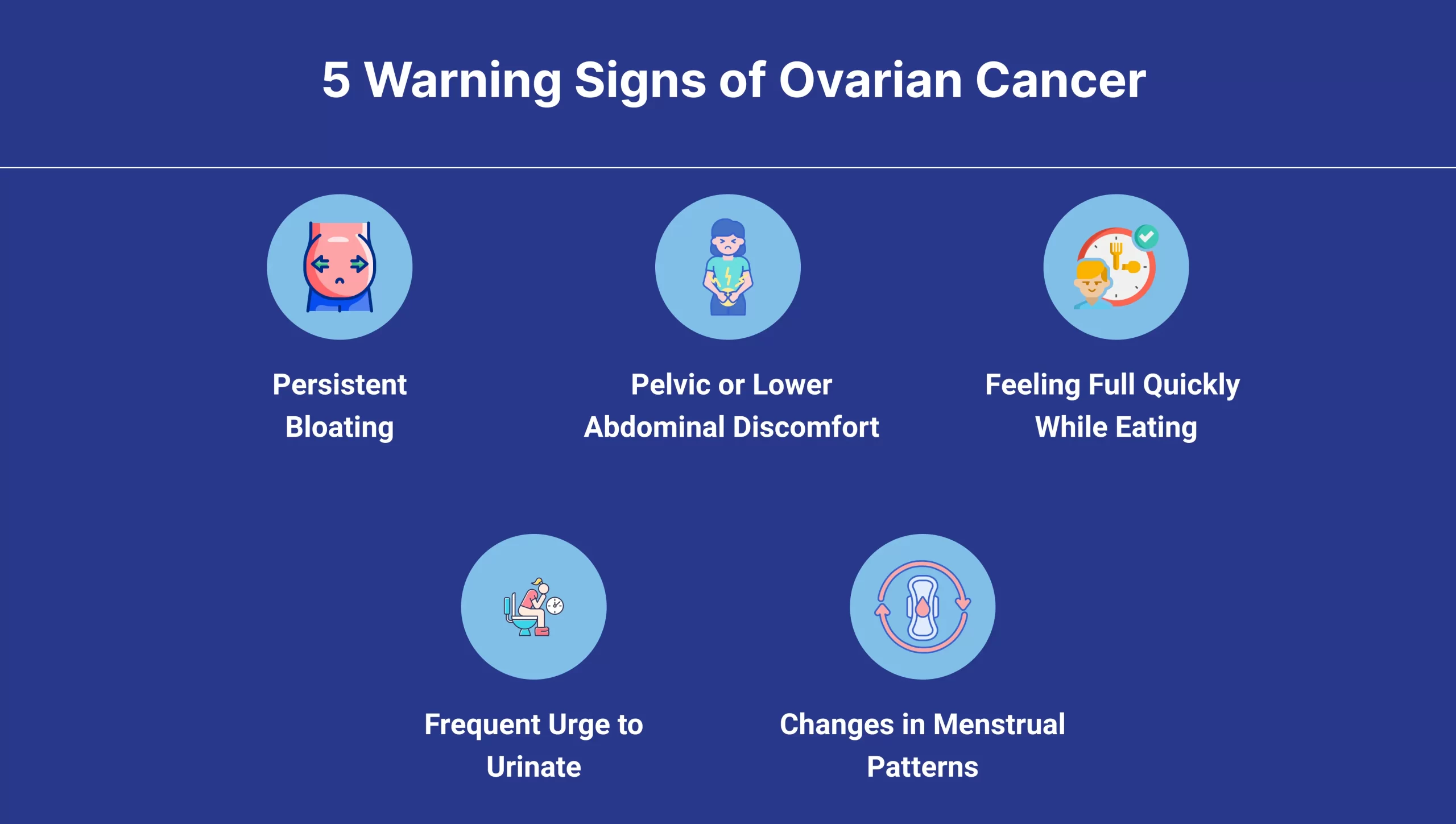
The following are the five most frequent initial signs that are identified by experts. All these symptoms may be of numerous innocent causes as well. The issue is their frequency and persistence. Here are some common warning signs of ovarian cancer:
1. Persistent Bloating
Incidents of bloating are highly normal, particularly following heavy meals or during menstrual periods. However, when bloating lasts a few weeks, the person does not feel well, or the bloating occurs despite eating lightly, it is something to discuss with a physician.
This is because ovarian alterations could influence digestion or abdominal comfort at times.
2. Pelvic or Lower Abdominal Discomfort
During periods, exercise, or stress, many women complain of mild pelvic discomfort. However, pain that persists longer or recurs without a definite cause needs to be examined.
It may not always be a sign of a severe problem, but early assessment will guarantee the feeling of security and prompt treatment.
3. Feeling Full Quickly While Eating
When you start to fill up quicker than usual or lose your feelings towards food even when you have not eaten much, you might attribute it to alterations in the abdomen.
This symptom is usually ignored since it appears to be connected with lifestyle or with digestion. However, combined with chronic swelling in the belly, it is a significant symptom to consider.
4. Frequent Urge to Urinate
When you feel the need to urinate more frequently than normal, without necessarily drinking more water, there may be pressure in the area of the bladder.
This may occur because of numerous trivial causes, such as minor infections. However, in cases where the symptom persists for weeks, physicians might recommend a mild assessment to exclude the rest. And since timely checks offer clarity and comfort, many women prefer reaching out to reliable 24/7 medical support when such symptoms continue.
5. Changes in Menstrual Patterns
Periodic variations described as minor are caused by stress, travelling, hormonal changes, and lifestyle. However, recurring anomalies with multiple cycles might require a more detailed examination.
In case you observe any alterations like lighter and heavier flow or unpredictable cycles or any form of discomfort that is not common with you, it is worthwhile to have a conversation with a gynaecologist. Preliminary discussions are used to offer clarity.
Conclusion
Ovarian cancer is such a disease that early detection really counts, and knowing such danger signals would make women feel more assured and in charge of their health. The aim is not to instil fear, but to promote conscious thinking. The majority of these symptoms may be explained by average and solvable causes. The length of time and frequency of occurrence of the symptoms are what count.
Our physicians at Meridian Hospitals commit themselves to delivering safe, respectful, and supportive services to women throughout their lifespan. Visiting a patient-focused multispecialty hospital in Chennai for guidance can make a real difference. Contact us for more information on how to get your treatment started.
FAQ’s
- Are these symptoms always linked to ovarian cancer?
No. Most of these symptoms can occur due to common and harmless reasons. They only need attention if they continue for several weeks.
- How is ovarian cancer diagnosed?
Doctors may suggest pelvic examinations, ultrasound scans, or simple blood tests. These help understand the cause of symptoms and guide the next steps.
- Can ovarian cancer be treated?
Yes. There are several effective treatments based on the stage and type. Early detection usually leads to better outcomes and smoother treatment experiences.
- Which age group is most at risk?
Women above 40 may have a slightly higher risk, but ovarian cancer can occur at any age. Regular check-ups support long-term well-being.
- How can I reduce my risk?
Healthy lifestyle choices, timely gynaecology check-ups, knowing your family medical history, and noticing consistent symptoms can help.