Most people think snoring is harmless. Annoying, sure. But harmless. It is not. For millions of people, that nightly snoring is a sign of something far more serious — a condition called sleep apnea. And if it goes untreated, it does not just ruin your sleep. It quietly puts your heart at risk, night after night, for years.
The connection between sleep apnea and heart attack is real, it is significant, and it does not get nearly enough attention.
What Exactly Is Sleep Apnea?
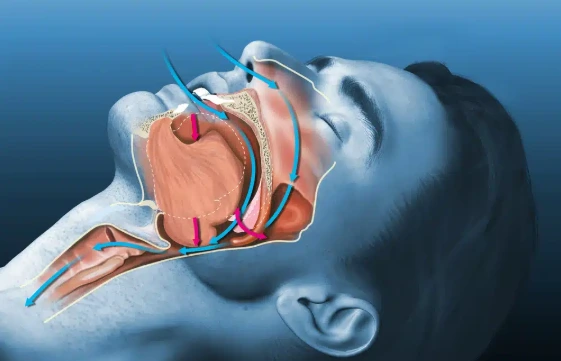
Sleep apnea happens when your breathing repeatedly stops during sleep. Each pause can last a few seconds — or over a minute. And it can happen dozens of times an hour.
Your body responds every time. Oxygen drops. Stress hormones spike. Your heart races. Then you gasp, your airway reopens, and the cycle begins again.
Most people never know it is happening. They sleep through the whole thing. Or they wake up groggy, blame stress, drink more coffee, and get on with the day.
That is the problem. Sleep apnea hides. And while it is hiding, it is doing real damage.
Here Is What It Does to Your Heart
Every time your breathing stops, your body kicks into emergency mode. Here is what happens inside:
- Oxygen levels in your blood drop sharply.
- Your brain triggers a surge of adrenaline to force your airway open.
- Your heart rate jumps and your blood vessels tighten.
- Blood pressure shoots up — sometimes dramatically.
Now imagine that happening 30, 40, even 60 times a night. Every night. For years.
Healthy people experience a natural drop in blood pressure during sleep. Their hearts get a break. People with sleep apnea do not get that break. Their cardiovascular system stays under stress from the moment they close their eyes to the moment they wake up.
It is like running your car engine at high speed all night, every night, and wondering why it wears out faster than it should.
Over time, that constant strain damages the walls of blood vessels, promotes inflammation, and speeds up the buildup of plaque inside the arteries. Those are the exact conditions that lead to heart attack and stroke.
The Numbers Tell a Hard Story
Those with untreated obstructive sleep apnea have a much greater risk of heart attack than people who don’t have it. The risk is even higher when sleep apnea occurs together with high blood pressure, diabetes, or obesity — conditions that commonly ride along with it.
Sleep apnea is also the most frequent culprit in resistant hypertension. Which is to say, if a patient’s blood pressure is poorly responsive to medication, OSA may be the not-yet-identified culprit for everybody.
And atrial fibrillation — a heart rhythm disorder that increases stroke risk — is much more prevalent amongst those with sleep apnea than the general population.
The connection is not subtle. It’s repeated, it’s well documented, and it’s underappreciated, undervalued by patients and providers alike.
Why So Many Cases Go Undiagnosed
Sleep apnea can be cured. But most people who have it never get diagnosed.
Why? Because the worst of it is while you are asleep. Your partner might tell you about the snoring. You may be tired no matter how many hours you get. But you blame it to a bad mattress, stressful week or just growing old.
Daytime symptoms that don’t scream sleep disorder. They look like a hundred other things:
- You wake up with a headache.
- You’re Having a Hard Time Concentrating at Work
- You nod off during meetings or while watching TV.
- You are irritable or depressed for no apparent reason.
- You have to get up more than once in the night.
Nothing could be easier to dismiss these signs. That is precisely why so many people’s sleep apnea goes undiagnosed—and why the heart silently takes the hit.
What Diagnosis Actually Looks Like
Getting tested for sleep apnea is easier than most would expect. A sleep study — known as a polysomnography — tracks your breathing, oxygen levels and heart activity while you sleep. This is done in a sleep clinic or, increasingly, in the patient’s home using a portable unit.
The Apnea-Hypopnea Index, which calculates how frequently you stop breathing or your breathing becomes shallow per hour, is used to report outcomes. Treatment recommendations are based on mild, moderate and severe categories.
The entire process is non-invasive. For many patients, one night’s worth of monitoring yields enough data to make a definitive diagnosis.
Treatment That Actually Works
The most widely used treatment is CPAP therapy — a machine that delivers continuous airflow through a mask during sleep, keeping the airway open all night.
It sounds cumbersome. Many patients are skeptical. But those who use it consistently report meaningful improvements: better sleep, lower morning blood pressure, more energy, and in many cases, a measurable reduction in cardiovascular risk.
For those who cannot tolerate CPAP, there are alternatives. Custom oral appliances worn during sleep can reposition the jaw to keep the airway open. Weight loss, cutting back on alcohol, and sleeping on your side can reduce apnea events significantly. In specific cases, surgical options may be considered.
The point is: there are real options. The condition is manageable. But only if it is caught.
Do Not Wait for a Bigger Sign
Sleep apnea is not known for loud crashing signals, but if present it can be very severe. It operates gradually and quietly, eroding the cardiovascular system that much more before it causes anything that the patient can feel to go wrong.
When you snore so loudly that you wake yourself up several times per night? When you feel tired to the point of collapse but you can’t for the life of you figure out why? When you’ve been told you stop breathing while you’re asleep — take it seriously. Not because it’s undoubtedly harmful. But because the test is cheap to get and it might make a big difference.
Your heart is working 24/7. At least it should have one day of good rest.
If you think you’re not sleeping well, go with that feeling.And a discussion with your physician — or a straightforward sleep study — might turn the entire thing on its head.
Speak With Our Sleep Medicine Team at Meridian Hospital
We provide comprehensive sleep assessments and individualized treatment plans tailored to your health history and lifestyle. If you have concerns about sleep apnea or your heart, we can help. Schedule a consultation with our Plumonology specialists today.