Every time a new virus surfaces, WhatsApp groups light up and people start making decisions based on half-read news articles. Bird flu is no different. It’s been around for decades, it sounds scary, and most of what’s circulating right now is either exaggerated or just wrong. So take a breath — and read this before you do anything else.
So What Exactly Is H5N1?
Think of it as a flu virus that evolved in birds. Most strains stay in birds. H5N1, however, has shown the ability to infect humans under specific conditions — usually through direct, close contact with infected animals or their droppings.
It’s not new. H5N1 was first identified in humans back in 1997. But with fresh cases surfacing across Asia and India in 2025, Tamil Nadu health authorities have stepped up monitoring. Chennai residents — particularly those near poultry farms, live bird markets, or wholesale meat areas — should stay informed.
What Are the Symptoms? How Is It Different From Regular Flu?
At first, nothing about H5N1 feels unusual. You’ll have fever, body aches, a scratchy throat — the kind of symptoms most people chalk up to a seasonal cold and sleep off.
The difference shows up within 24 to 48 hours.
Bird flu tends to move faster and hit harder. Breathing becomes difficult. The chest tightens. In severe cases, it can develop into pneumonia or acute respiratory distress — which is when hospitalisation becomes critical.
Watch for these symptoms, especially if you’ve recently been near birds:
- Fever above 38°C that doesn’t break easily
- Dry cough and throat irritation
- Heavy fatigue and muscle pain
- Shortness of breath — this is the red flag
- Eye redness or conjunctivitis in some cases
If those last two show up together after bird contact, don’t wait. Get to a hospital the same day.
How Does Bird Flu Actually Spread in a City Like Chennai?
Here’s the thing — Chennai isn’t a rural poultry farm. But the city has large wholesale markets, roadside meat shops, and communities living close to bird-rearing areas. That proximity matters.
Transmission typically happens through:
- Handling sick or dead birds without gloves
- Breathing in dust or droplets near infected poultry
- Touching contaminated cages, feathers, or surfaces and then touching your face
- Children playing near bird markets or open poultry stalls
Person-to-person spread remains extremely rare. That’s the part most news coverage skips. You’re not going to catch bird flu on the Chennai Metro or in a crowded mall. The risk is specific — it comes from direct animal exposure.
And yes, eating properly cooked chicken is safe. Heat above 70°C kills the virus. Your evening chicken curry or grilled leg piece is fine.
Simple Steps to Protect Yourself and Your Family
You don’t need to overhaul your life. A few sensible habits go a long way:
- Wash your hands with soap after visiting any market — not just poultry markets, any market
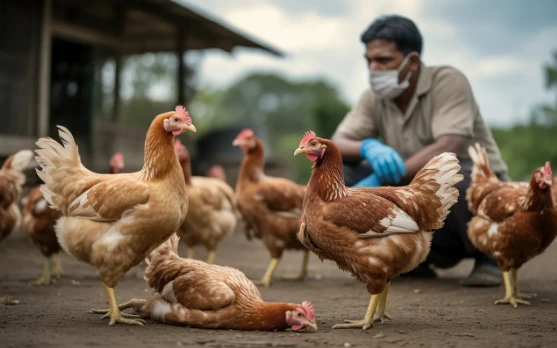
- If you work with birds, wear gloves and a basic mask — it’s not excessive, it’s just smart
- Keep kids away from live bird stalls; their immunity is still developing
- Don’t handle dead or visibly sick birds — report them to your local health authority instead
- Cook all poultry thoroughly
- Follow updates from the Tamil Nadu Directorate of Public Health
If anyone in your household shows flu symptoms after recent bird contact — even indirect contact — call a doctor before assuming it’s a regular cold.
When to Come to Meridian Hospital
At Meridian Hospital in Kolathur, our internal medicine and respiratory care teams handle infectious disease cases year-round. We don’t wait for outbreaks to prepare — the protocols are already in place.
If you or someone in your family is showing respiratory symptoms after potential bird exposure, come in for an evaluation. Early testing and treatment make a real difference with H5N1.
Book your appointment at Meridian Hospital, Kolathur, Chennai. Call us or visit our website today.
Conclusion
Bird flu is not as scary as it seems once you are aware. The threat to an average Chennai citizen is very low. Low is not zero, and low can be very high if your profession or lifestyle includes exposure to poultry. Being aware and taking precautions are all you need to do.
[Internal link: General Medicine / Infectious Disease department page]
Frequently Asked Questions
Is bird flu spreading in Chennai right now?
There is no confirmed community outbreak in Chennai as of 2025. However, isolated cases have been tracked in India, and Tamil Nadu health teams are monitoring the situation closely. The risk remains low for the general public but higher for those with regular poultry exposure.
Can I get bird flu from eating chicken or eggs?
No — not from properly cooked food. The H5N1 virus cannot survive cooking temperatures. Avoid raw or undercooked poultry as a standard practice, bird flu aside.
How quickly does bird flu progress?
Faster than regular flu. Symptoms can worsen significantly within 48 to 72 hours of onset. This is why early medical attention matters — antiviral medication works best when started early.
What treatment is available for H5N1?
Antiviral drugs like oseltamivir (Tamiflu) are the primary treatment. Severe cases need hospital-based respiratory support. The earlier treatment starts, the better the outcome.
When should I actually go to a hospital?
If you have a high fever AND trouble breathing AND recent bird exposure — go immediately. Don’t call a friend, don’t Google your symptoms. Go to the hospital.